By continuing to use the site or forum, you agree to the use of cookies, find out more by reading our GDPR policy

We already know that Windows 11 Home will require a Microsoft account (MSA) at the beginning of the installation process. What Microsoft hasn’t publicized is whether it’s possible to log in with just a local account. It is, but only with Windows 11 Pro. A source close to Microsoft has now told us that the only way to avoid using an MSA is with Windows 11 Pro. According to our source, users who buy or own a PC with Windows 11 Pro may choose to use either a local account or an MSA from the very beginning of the installation process. The Windows 11 Home MSA requirement isn’t permanent, just unavoidable. Microsoft will allow the user to transition to a local account once the Windows 11 Home installation process has completed. Retail versions of Windows 11 Home will offer the same experience. Our source told us that local account users will not have a “diminished or limited experience,” though they won’t be able to sync content or use Windows 11’s ability to sync or recommend content from other devices. That content—which could include documents or webpages that a user had viewed on another PC—is typically synced to the user’s MSA account.
Microsoft’s waning support for local accounts
Microsoft has no incentive to encourage local accounts. The company would prefer to use your MSA in a give-and-take relationship: Microsoft offers synchronized supplementary services, like OneDrive cloud storage and Office apps on the web, and in return the company quietly takes data about how you use Windows and Microsoft services. Privacy concerns flared in 2015 with the advent of Windows 10 and its telemetry, then faded. Microsoft does allow you many, many options to guard your privacy within Windows 10—but it’s also betting you won’t bother. Local accounts have been seen as one way around that. Microsoft may be able to watch what you do on the web (anonymously), but it won’t be able to match up your actions if you move to another PC. At the same time, Microsoft has changed up the ways in which it allows you to create a local account. In 2019 Microsoft began phasing out the option to ue a local account during setup unless Internet access was unavailable. Even then, the OOBE experience often casually asked you to connect to the Internet before asking you to sign in. That led to bizarre scenarios where users who wanted to sign in with a local account needed to turn off their Wi-Fi before setting up Windows 10. Microsoft has apparently closed that loophole entirely now. That leaves users with an expensive alternative: Windows 10 Pro (and, we expect, Windows 11 Pro) costs $199.99 for a standalone license, versus $139.00 for Windows 10 Home. Microsoft does offer some premium apps and functions on Windows 10 Pro devices that it doesn’t on Windows 10 Home, though many aren’t of direct use to consumers. (One exception is Windows Sandbox, which is quite useful.) If you already own Windows 10 Pro, you can upgrade to Windows 11 Pro for free. Microsoft used to offer Surface devices with Windows 10 Pro installed, but that’s changed, too. The most recent versions of the Surface Pro tablets ship with Windows 10 Home, and only the more expensive Surface Pro for Business tablets include Windows 10 Pro. For many users watching the Windows 11 launch, the MSA requirement can’t help but feel like another kick in the ribs. Confusion over Windows 11’s hardware requirements and the need for a TPM have overshadowed the numerous Windows 11 features that Microsoft has added. Will Microsoft backtrack? It certainly could. The opinion of one ex-Microsoft security analyst is that it could only happen if users kicked up a fuss.
Via pcworld.com

Four keyboard shortcuts to make your Windows 11 experience faster and more productive. You can now install and run the first preview build of Windows 11 through the Dev Channel of Windows Insider program. Windows 11 brings a slew of features including, Snap layouts, Widgets, Center Start menu, Android apps, and much more to increase your productivity and save time. Windows 11 provides four new keyboard shortcut keys along with familiar shortcuts to help you work faster and more efficiently. On Windows 11, you can always use the mouse to navigate and handle applications and features, but keyboard shortcuts help you to perform actions faster using a single press of multiple keys, saving you clicks and time. Although you can use all the Windows 10 shortcuts on Windows 11, the new version of the OS introduces several new keyboards shortcuts to give you quick access to new features, including Quick Settings, Notification Center, Widgets, and Snap layouts. In this Windows 11 guide, we will look at several new keyboard shortcuts to help you improve productivity. Here are the new keyboard shortcuts for Windows 11:

Windows key + A keyboard shortcut opens the Quick Settings flyout.
The Quick Settings is part of the new Action Center experience that now breaks the interface into two flyouts (Quick Settings and Notification Center). The menu includes the most common settings, such as volume, brightness, wireless, Bluetooth, Focus Assist, etc.
If you play audio or video with Microsoft Edge, the Quick Settings will also show new media controls above the flyout.

Windows key + N keyboard shortcut opens the Notification Center flyout.
The Notification Center is also part of the new Action Center experience, and it includes all your notifications and a full-month calendar view.

Windows key + W keyboard shortcut opens the Widgets interface.
On Windows 11, Widgets is a new feature similar to "news and interests" for Windows 10. It features a bunch of cards with different types of information, such as weather, news, sports, stocks, traffic, and you can even display Microsoft To-Do lists and more.

In addition to the keyboard shortcut, you can also click the icon that Microsoft is placing by default in the taskbar.

Windows key + Z keyboard shortcut opens the Snap layouts menu.
Snap layouts is a new feature part of the Snap assist experience that introduces a menu when hovering over the maximize button with different grids to snap windows with different layouts. Once you select a position for the app, Snap assist will guide you to continue positioning windows in the remaining zones. Depending on the display size, you may see four or six different grids in the menu.

Alot more on Windows 11 on our Forum Forum Link
Techsupport and via msft, microsoft, Google

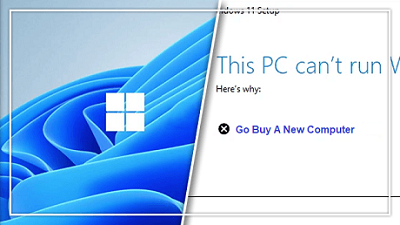
Microsoft has had six years to prepare for the launch of Windows 11, but the company is still struggling to explain its new hardware requirements. Windows 11 will officially support Intel 8th Gen Coffee Lake or Zen 2 CPUs and up, leaving behind millions of PCs that were sold during the launch of Windows 10. It’s an unusual surprise if you purchased a new PC for Windows 10, or perhaps you have a perfectly capable machine that’s even older. Windows 11 will require Intel 8th Gen Coffee Lake or Zen 2 CPUs and up, TPM 2.0 (Trusted Platform Module) support, 4GB of RAM, and 64GB of storage. Microsoft doesn’t typically enforce such specific processor requirements with Windows — with both Windows 8 and Windows 10 only requiring a 1GHz processor, 1GB of RAM (2GB for 64-bit), and 16GB of storage (20GB for 64-bit). Power users of Windows, and IT admins alike, have built up an expectation of being able to upgrade to the latest OS, regardless of what hardware they’re running. It looks like that’s about to end with Windows 11. After much confusion last week, Microsoft attempted to explain its hardware requirements again yesterday, and it sounds like the main driver behind these changes is security. Coupled with Microsoft’s hardware requirements is a push to enable a more modern BIOS (UEFI) that supports features like Secure Boot and TPM 2.0 (Trusted Platform Module). When you combine TPM with some of the virtualization technologies that Microsoft uses in Windows, there’s an understandable security benefit that we’ve discussed in detail previously. Microsoft claims that a combination of Windows Hello, Device Encryption, virtualization-based security, hypervisor-protected code integrity (HVCI), and Secure Boot “has been shown to reduce malware by 60 percent.” You obviously need modern hardware to enable all these protections, and Microsoft has been building toward this moment for years. TPM support has been a requirement for OEMs to gain Windows certification since around the release of Windows 10, but Microsoft hasn’t forced businesses or consumers to enable it. Microsoft’s decision to force Windows 11 users into TPM, Secure Boot, and more comes at a pivotal moment for Windows. It’s Microsoft’s operating system that’s always caught up in ransomware and malware attacks, and things are only going to get worse if the level of Windows hardware security doesn’t go up a notch. That delicate balance of security and the typical openness of Windows is something that Microsoft will struggle with over the next decade, as it wrestles with modernizing Windows and the understandable backlash. While Microsoft is waiving its new hardware requirements during the preview phase of Windows 11, we still don’t know exactly what devices will be supported when it launches later this year. Microsoft tried to offer some more clarity around this yesterday, but it wasn’t the level of detail we were hoping for. “As we release to Windows Insiders and partner with our OEMs, we will test to identify devices running on Intel 7th generation and AMD Zen 1 that may meet our principles,” says a blog post from the Windows team. That could be good news for the Surface Studio 2, a $3,499 device that Microsoft still sells with a 7th Gen chip that’s not on the Windows 11 list. This same blog post also revealed that the 7th Gen is probably as far back as Microsoft is willing to concede. “We also know that devices running on Intel 6th generation and AMD pre-Zen will not” meet Microsoft’s minimum system requirements, said the blog post before it was edited to remove this line. It’s not clear why Intel’s 6th Gen chips are definitely off the list, but part of this decision could be related to Spectre and Meltdown — two major computer processor security bugs that affected nearly every device made for 20 years. Follow this thread and more on OUR FORUM.